Deepak Sengar · Published 23 July 2026· 11 min read
How to Show Up in ChatGPT Results: Complete AI Search Optimization Guide (2026)
Learn how to make your website appear in ChatGPT results with proven AI Search Optimization (AEO) strategies. Improve visibility, authority, and AI citations in 2026.
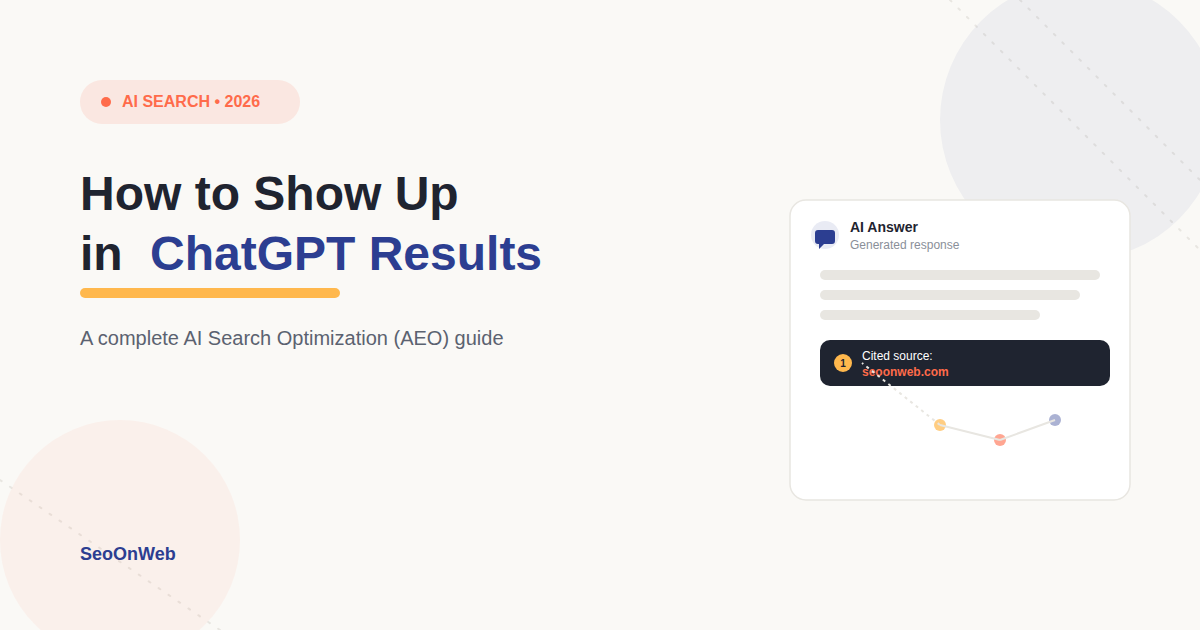
Table of contents
- 01What Does It Mean to Show Up in ChatGPT Results?
- 02How Does ChatGPT Find Information?
- 03Why Showing Up in ChatGPT Results Matters
- 04Make Sure Your Website Can Be Crawled
- 05Optimize Your Website for AI Search (AEO)
- 06Create Helpful, Original & Authoritative Content
- 07Structure Content That AI Can Easily Understand
- 08Build Topical Authority in Your Niche
- 09Improve Your Technical SEO
- 10Earn High-Quality Mentions & Backlinks
- 11Use Structured Data (Schema Markup)
- 12Optimize for Conversational Search Queries
- 13Monitor Your AI Search Visibility
- 14Common Mistakes That Prevent Your Website From
- 15Appearing in ChatGPT
- 16SEO vs AEO vs GEO
- 17AI Search Optimization Checklist
- 18Best Tools for AI Search Optimization
- 19Final Thoughts
- 20Frequently Asked Questions
A couple of years ago, if you wanted to find a good SEO agency, you Googled it, scrolled past the ads, and clicked into a few blue links. Now, a growing number of people just ask ChatGPT instead — "who's a good SEO agency for a small business in India" — and get a direct answer, sometimes with a couple of names attached, sometimes without a single click to any website at all.
That shift is exactly why "AI Search Optimization" has become something businesses actually need to think about, not just a buzzword marketers throw around. Traditional Google SEO isn't going anywhere — it's still the foundation everything else sits on .If you want the full breakdown of those traditional SEO fundamentals first, that's a good place to start before layering AEO on top. but there's now a second layer on top of it: getting picked up, cited, or recommended by AI systems like ChatGPT, Gemini, Perplexity, and Copilot.
In this guide, we'll walk through exactly how ChatGPT finds and uses information, what actually influences whether your site gets mentioned, and the specific technical and content steps you can take to improve your odds. By the end, you'll have a working checklist you can actually run through on your own site.
What Does It Mean to Show Up in ChatGPT Results?
When someone asks ChatGPT a question, one of a few things can happen. It might answer purely from what it learned during training, without referencing anything live. It might run a live web search and pull in current information, sometimes naming a source or linking to it. Or it might mention a brand or business by name because that brand shows up consistently and credibly across the sources it's drawing from.
"Showing up" in ChatGPT results can mean different things depending on the situation — sometimes it's a direct citation with a link, sometimes it's just your business getting named as a recommendation, and sometimes it's your content quietly shaping the answer without any visible credit at all. All three are valuable, but the first two are what most businesses are actually chasing.
How Does ChatGPT Find Information?
This is the part that trips people up. ChatGPT isn't one single mechanism — it's a mix of a few different information sources working together, and which one gets used depends on the query and which version/mode is answering.
There's the training data — the enormous snapshot of text the model learned from, which has a cutoff date and doesn't update in real time. There's live web search, which more recent versions of ChatGPT can use to pull in current information, similar to how a search engine crawls and indexes pages. That live search often leans on existing search infrastructure, including Bing's index, which means being properly indexed by traditional search engines still matters enormously.
And underneath all of it, the model is weighing trust signals — does this site look authoritative, is the information consistent across multiple sources, does the content actually answer the question clearly.
The practical takeaway: you can't optimize for "ChatGPT" as some separate, isolated system. Good traditional SEO and good AI visibility overlap by a huge margin.
Why Showing Up in ChatGPT Results Matters
It's tempting to treat this as a nice-to-have, but a few things make it worth real attention. People asking ChatGPT a question tend to be further along in their decision-making — they're not scrolling ten results, they're getting one answer and often acting on it, which makes this a genuinely high-intent channel. Getting named builds a kind of brand credibility that's hard to manufacture any other way, since it can feel like a neutral recommendation rather than an ad. And simply put, this is where a growing slice of search behavior is heading, so businesses that adapt early tend to have an easier time than those who wait until it's obvious.
Great SEO isn't about tricks — it's about being genuinely useful, and making sure Google can tell.
Make Sure Your Website Can Be Crawled
None of the content strategy below matters if your site can't actually be read by crawlers in the first place. This is the boring, unglamorous part — but skipping it undoes everything else.
Start with the basics: is your site indexed on Google and Bing? You can check this with a simple site:yourdomain.com search on each. Look at your robots.txt file and make sure you're not accidentally blocking search engines or AI crawlers from important pages. Submit an XML sitemap through Search Console and Bing Webmaster Tools so crawlers know exactly what pages exist.
And critically — if your site relies heavily on JavaScript to render content, double-check that the actual text is visible in the page source, not just generated after the fact in the browser. A lot of crawlers, AI-related ones especially, don't execute JavaScript the way a browser does, and content that only appears after a script runs can be invisible to them entirely.
Optimize Your Website for AI Search (AEO)
Once your content can actually be found, the next question is whether it's usable by an AI system trying to construct an answer. This is where Answer Engine Optimization (AEO) comes in, and it's a slightly different mindset than classic keyword-focused SEO.
Write to directly answer the question a real person would type or ask out loud, right near the top of the section — don't bury the actual answer three paragraphs into scene-setting. Keep paragraphs short. Use lists and tables wherever information is naturally comparative or sequential, since these formats are easy for a model to extract cleanly.
Use clear, descriptive headings that basically function as mini-questions. And write conversationally — the way you'd actually explain something to a client sitting across from you, not the way a textbook would phrase it. This overlaps heavily with something called semantic SEO — writing around the full meaning and context of a topic, not just repeating an exact keyword phrase over and over.
Create Helpful, Original & Authoritative Content
This is where E-E-A-T (Experience, Expertise, Authoritativeness, Trust) comes back into the picture, and it matters just as much for AI visibility as it does for regular Google rankings — arguably more, since AI systems are explicitly trying to judge which sources are trustworthy enough to cite.
The strongest signal you can offer is real experience — write about things you've actually done, tested, or seen happen with real clients, not just general theory repeated from other articles. Original research, even something as small as your own small survey of 20 clients or a breakdown of results from your own campaigns, carries real weight, since it's not something that exists anywhere else for a model to have already learned. Cite real statistics with sources.
Bring in expert opinions, whether that's your own team's take or a quote from someone credible in your space. And keep information updated — stale, outdated content is one of the fastest ways to lose trust, both with readers and with the systems evaluating your site. We've written a full process for keeping content updated instead of letting it go stale, if that's the piece you're missing.
Consistency beats cleverness. Publish, measure, refine, repeat — that's the whole game.
Structure Content That AI Can Easily Understand
Good structure isn't just about aesthetics — it's about making your content genuinely parseable.
Use Proper Heading Structure
Stick to a logical hierarchy: one H1 for the page title, H2s for major sections, H3s for sub-points underneath. Skipping levels or using headings purely for visual styling (rather than actual structure) makes it harder for both search engines and AI systems to understand how your content is organized.
Add FAQ Sections
FAQs are one of the most directly useful formats for AI systems, since they're already structured as a question paired with a clear answer — almost exactly the shape an AI-generated response takes.
Use Bullet Lists
Wherever you're listing steps, features, or options, a bullet list is easier to extract cleanly than the same information buried in a paragraph.
Use Comparison Tables
When you're comparing two or more things — tools, services, approaches — a table communicates that comparison far more clearly than prose ever could.
Write Short Answer Paragraphs
Aim for answers that could stand alone as a 2-3 sentence direct response, even if you elaborate further afterward. This "answer first, then explain" structure serves both human skimmers and AI extraction equally well.
Build Topical Authority in Your Niche
Publishing one great article on a topic helps a little. Publishing a genuinely deep, interconnected set of content around that topic helps a lot more. This is the idea behind topic clusters and pillar pages — one comprehensive "pillar" page on a broad topic, surrounded by several more specific supporting articles that all link back to it and to each other.
Internal linking is what actually ties this together — every new post should link to a few relevant older ones, and vice versa. And consistency matters more than intensity: a steady publishing rhythm over months builds authority in a way that one big content push followed by silence never does.
Improve Your Technical SEO
Content quality gets you most of the way there, but technical fundamentals still matter, both for regular SEO and for how confidently a crawler or AI system treats your site. Make sure you're on HTTPS. Confirm your site is genuinely mobile-friendly, not just technically responsive. Keep page speed fast — bloated, slow-loading pages get deprioritized. Use canonical tags to avoid duplicate content confusion. Keep URLs clean and structured (/services/seo rather than /page?id=42). Add structured data/schema markup (more on this below). And keep an eye on Core Web Vitals — the specific performance metrics Google uses to judge real-world user experience.
Earn High-Quality Mentions & Backlinks
Because AI systems are partly judging trust based on how consistently and credibly a business is mentioned across the web, being talked about in other places genuinely helps — not just links pointing at your site, but mentions of your brand name in general.
This can come from digital PR (getting quoted or featured in relevant publications), genuine guest posts on sites your audience actually reads, listings in industry directories, being present and reviewed on review platforms, and building out real author profiles that connect your name to your expertise across the content you publish. None of this needs to be manufactured or spammy — a handful of genuine, relevant mentions built up over time outweighs a pile of low-quality ones.
Use Structured Data (Schema Markup)
Schema markup is code added to your pages that explicitly labels what different pieces of content are — this is an article, this is a FAQ, this is an organization, this is a review. It doesn't change what a visitor sees, but it gives search engines and AI systems an unambiguous, machine-readable description of your content instead of making them guess. For how to actually implement it, including WordPress-specific steps, see our JSON-LD guide.
The schemas worth prioritizing: Article schema for blog posts, FAQ schema for question-and-answer sections, Organization schema describing your business itself, Author schema tying content to a real person, Breadcrumb schema showing site structure, and Product schema if you sell anything directly.
Optimize for Conversational Search Queries
People type differently into ChatGPT than they type into Google. A Google search might be "SEO tools." A ChatGPT question is more likely to be "what are the best SEO tools for beginners on a tight budget?"
That means your content should genuinely include and answer full, natural questions — not just target short keyword fragments. One good source for that natural phrasing is mining Reddit and Quora for the exact phrasing real people use, which we cover in our keyword research guide. Lean into long-tail phrasing, write the way people actually speak, and consider structuring headings as literal questions where it makes sense, since that format maps almost directly onto how conversational queries are phrased.
Monitor Your AI Search Visibility
You can't improve what you're not tracking. Google Search Console and Bing Webmaster Tools remain essential for understanding your indexing status and search performance. Microsoft Clarity gives you real user behavior data. There's also a growing category of dedicated AI-visibility tracking tools built specifically to monitor whether and how often your brand shows up in AI-generated answers. And honestly, one of the simplest methods is still manual — periodically ask ChatGPT, Gemini, and Perplexity real questions related to your business and see what comes back.
Common Mistakes That Prevent Your Website From
Appearing in ChatGPT
A handful of issues show up again and again on sites that struggle with AI visibility: thin content that doesn't actually go deep enough to be useful, duplicate content copied or rehashed with no real added value, poor technical SEO that keeps crawlers from properly reading the site, a lack of internal linking that leaves pages isolated and hard to connect to a broader topic, accidentally blocking AI crawlers through robots.txt, putting important information only inside images with no accompanying text, and letting content go stale without updates.
SEO vs AEO vs GEO
These three terms get used almost interchangeably, but they describe slightly different goals.
SEO | AEO | GEO | |
Focus | Google Rankings | AI Answers | AI Search Visibility |
Core unit | Keywords | Direct Answers | AI Citations |
Success metric | Clicks | Mentions | Brand Visibility |
Where it shows up | SERPs | ChatGPT | ChatGPT, Gemini, Perplexity |
In practice, they're not competing strategies — they're overlapping layers built on the same foundation of genuinely helpful, well-structured, trustworthy content.
AI Search Optimization Checklist
Run through this on your own site — it's the practical summary of everything above:
✅ Google Indexed
✅ Bing Indexed
✅ XML Sitemap submitted
✅ Robots.txt checked (not blocking anything important)
✅ E-E-A-T signals present (real author bios, real experience, real data)
✅ FAQ Schema added
✅ Internal linking between related pages
✅ Genuinely helpful, non-thin content
✅ Fast-loading website
✅ Mobile-friendly design
✅ Structured data implemented
✅ Content kept updated, not stale
Best Tools for AI Search Optimization
Free Tools | Paid Tools |
Google Search Console | Ahrefs |
Bing Webmaster Tools | SEMrush |
Google Analytics | Surfer SEO |
Google Trends | HubSpot AEO tools |
Microsoft Clarity | Screaming Frog |
Final Thoughts
AI search is genuinely changing how people find information, but it hasn't replaced the fundamentals — it's added a new layer on top of them. Traditional SEO is still the foundation; AEO and GEO are what improve your odds of actually being cited once that foundation is solid.
The businesses that do well here aren't chasing some secret trick. They're the ones publishing helpful, original, well-structured, technically sound content consistently — content that's genuinely useful to a person, which also happens to be exactly what these AI systems are trying to identify and surface.
Frequently Asked Questions
Q1. What does it mean to show up in ChatGPT results?
Q2. Does ChatGPT use Google Search?
Q3. How can I optimize my website for ChatGPT?
Q4. What is AI Search Optimization (AEO)?
Q5. Does SEO still matter for ChatGPT?
Q6. Does ChatGPT read robots.txt?
Q7. What schema markup helps AI understand content?
Q8. How long does it take to appear in ChatGPT results?
Q9. Can new websites appear in ChatGPT answers?
Q10. How can I improve my AI search visibility?
Q11. What are the biggest mistakes to avoid?
Q12. Is AEO replacing traditional SEO?
More from the blog
All posts
Top 8 SEO Tips for Beginners in 2026
Learn the top 8 SEO tips for beginners in 2026. Discover keyword research, on-page SEO, technical SEO, AI search optimization, and proven strategies to rank higher on Google.
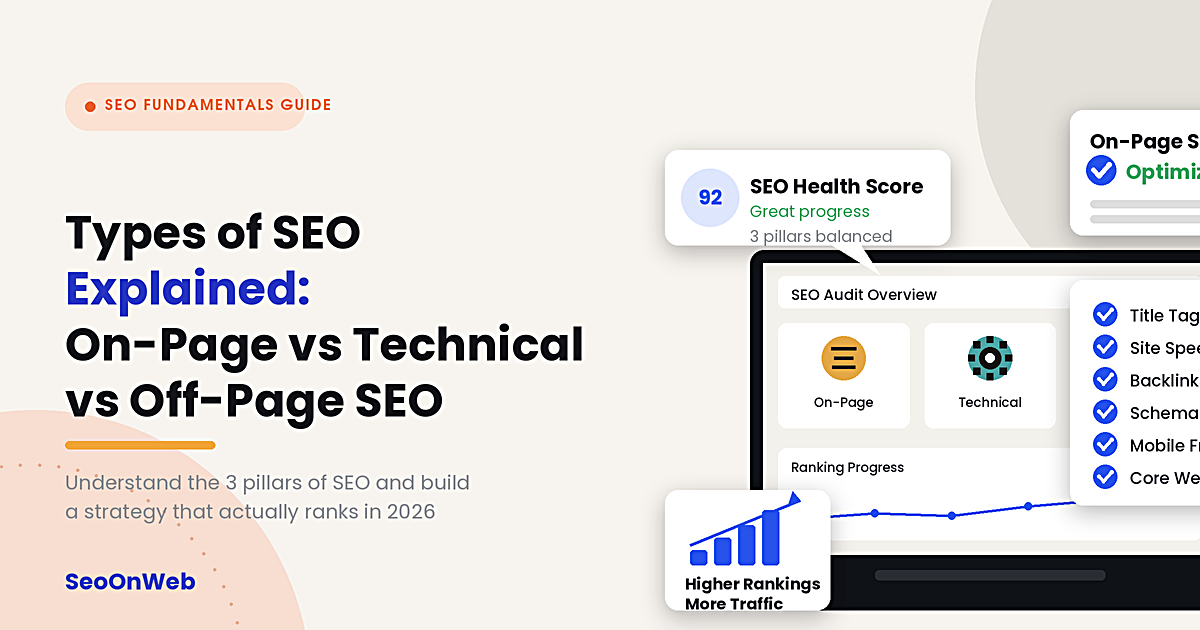
Types of SEO Explained: On-Page vs Technical vs Off-Page SEO in 2026
Confused by the types of SEO? Learn on-page vs off-page SEO, technical SEO checklist, and which to prioritise in 2026 for better rankings and AI search visibility.
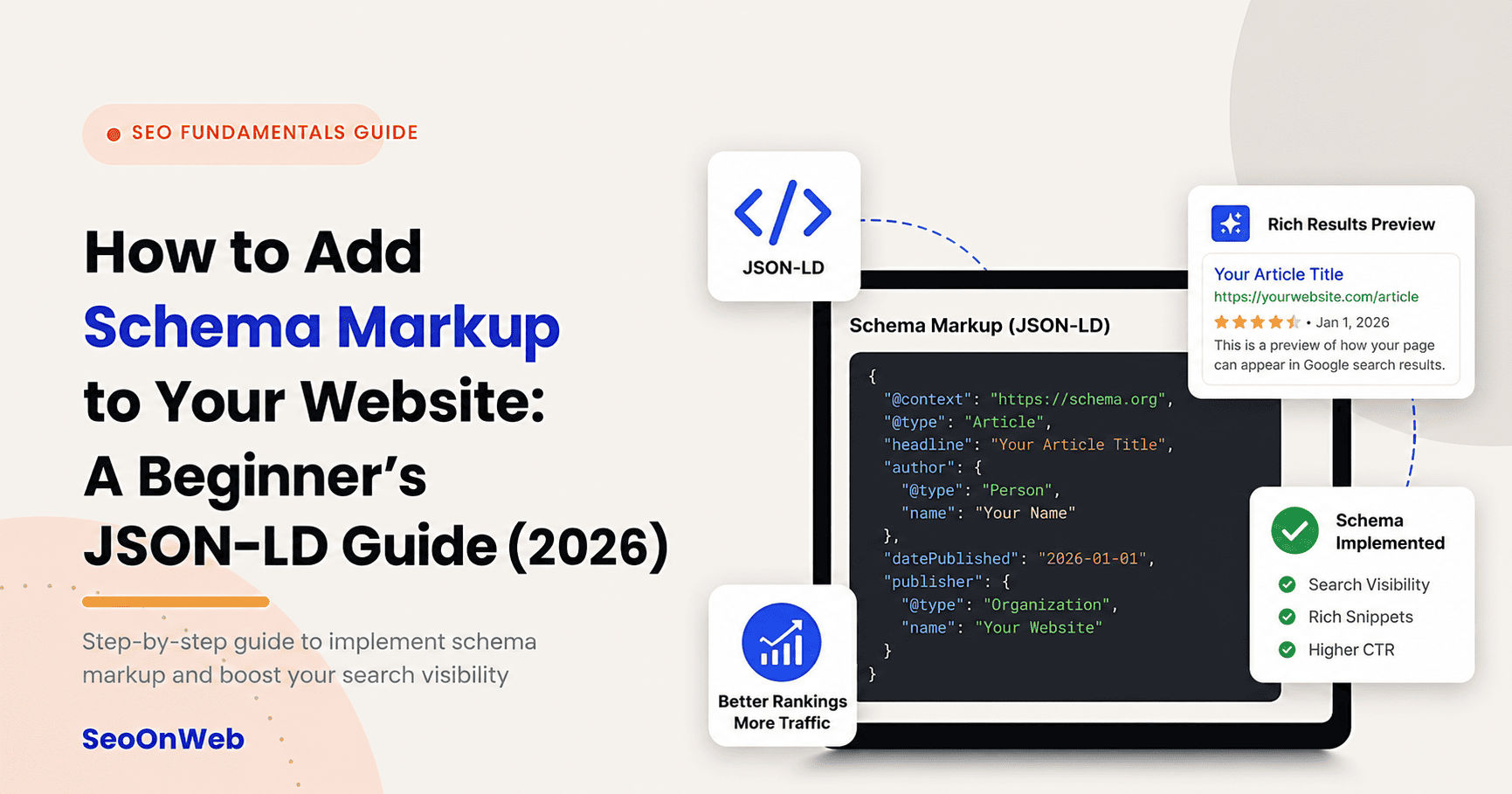
How to Add Schema Markup to Your Website: A Beginner's JSON-LD Guide (2026)
Learn how to add schema markup to your website with this beginner-friendly JSON-LD guide — includes WordPress steps, testing tools, and real examples.
Let's talk
Ready to grow with SEO that actually works?
Book a free 30-minute strategy call and we'll walk through your site, your goals, and the shortest path to real results.

Written by
Deepak Sengar
SEO Expert · Founder, SeoOnWeb
Deepak Sengar is an SEO specialist with 3+ years of experience across on-page SEO, technical SEO, AI Search Optimization (AIO), Answer Engine Optimization (AEO), Generative Engine Optimization (GEO), keyword research, and content optimization. He holds a Bachelor of Business Administration (BBA) from Bundelkhand University. He most recently worked as an SEO Executive at College Drishti, a Delhi-based education consultancy, from July 2025 to May 2026, where he led SEO strategy to grow organic visibility and traffic for undergraduate (UG) and postgraduate (PG) admissions content. Today, through SeoOnWeb, he helps businesses build ranking strategies rooted in the same on-page, technical, and off-page fundamentals.
More about Deepak